
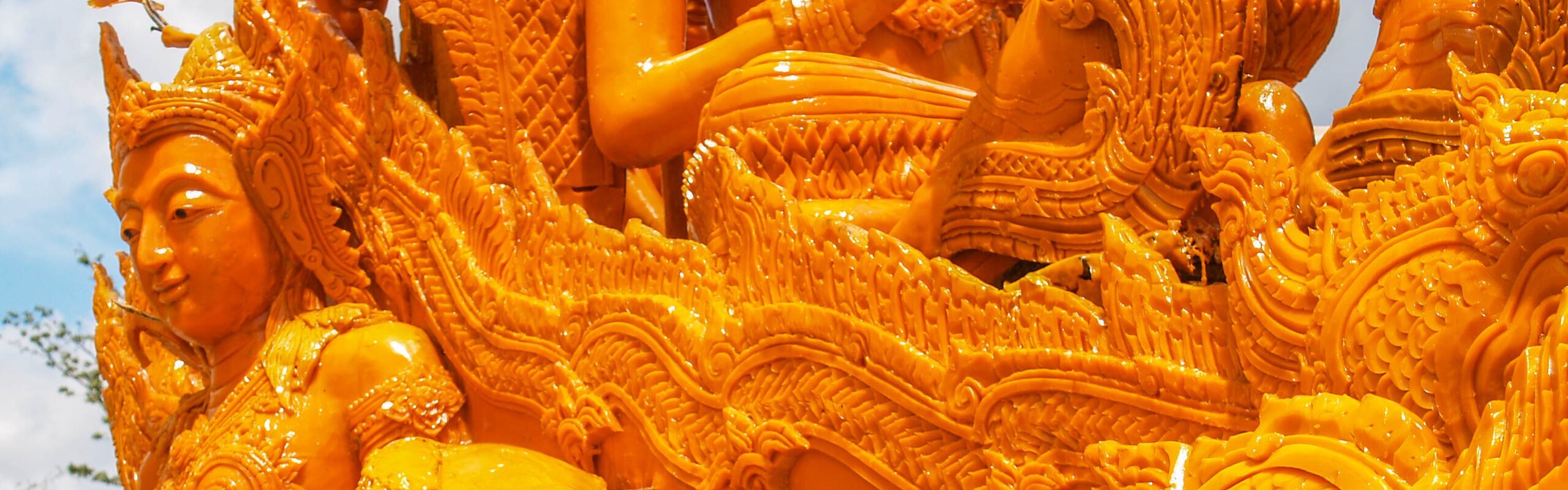
The Candle Festival in Ubon Ratchathani is one of Thailand's most visually striking Buddhist celebrations.
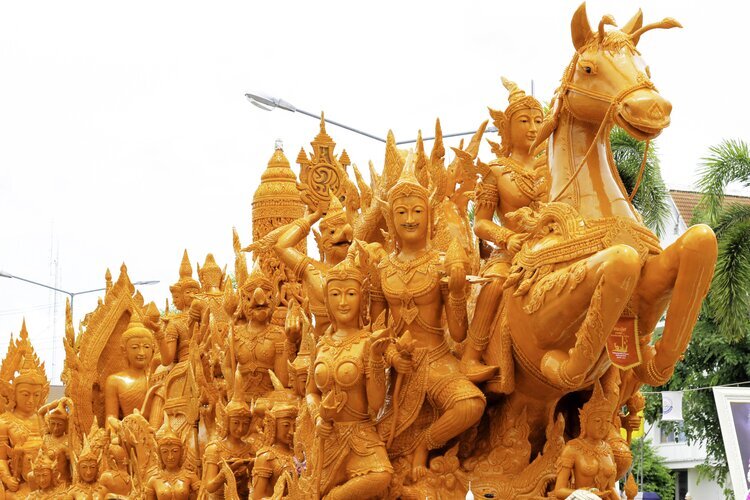
You'll see 5-to-10-meter-tall candle floats, covered with beautiful carvings, while people sing, dance, and cheer around them. Alongside the parade, you can also join the serene Buddhist rituals, like the candlelight procession.
If you're planning to witness this once-a-year spectacle, this guide will help you navigate the glowing processions and hidden rituals of this 2026 lunar celebration.
When Is the Ubon Ratchathani Candle Festival 2026?
In 2026, the festival falls on July 29–30, coinciding with Asanha Bucha and Wan Khao Phansa. These dates shift each year according to the lunar calendar, but they typically fall in July.
Both days feature the iconic candle parades, and many travelers plan their visits around just one of them.
However, the atmosphere actually builds over nearly a week, as wax sculptures are gradually installed and the city fills with markets, performances, and preparations.
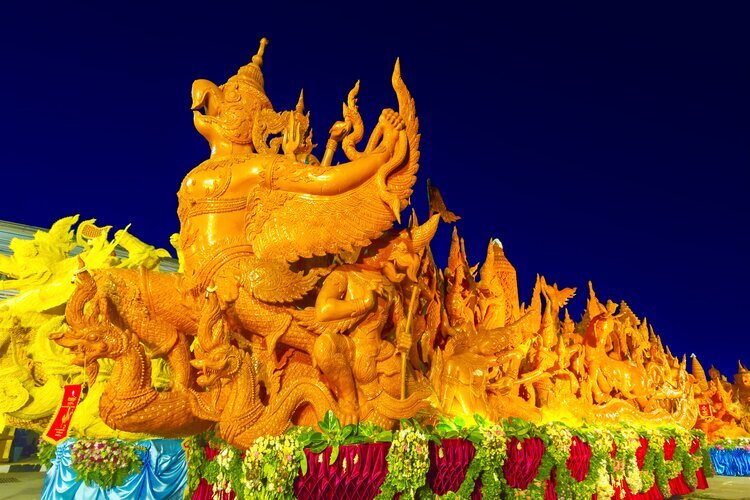 Ubon Ratchathani Candle Festival, Thailand
Origins of the Ubon Ratchathani Candle Festival
The festival, as you see it today, only took shape in the early 1900s. Before that, it wasn't a celebration at all, but a quiet act of merit-making.
Every Buddhist Lent, monks traditionally remain in their temples for three months of study and meditation. In the old days, locals would donate bundles of small candles so the monks had light to read scriptures at night.
Over time, this simple offering began to carry symbolic meaning. The more elaborate the candle, the deeper the devotion, and the greater the merit believed to be gained.
As this belief grew, villages began to outdo one another through finer craftsmanship, larger sculptures, and more elaborate designs.
This friendly competition gradually transformed the ritual into the large-scale festival you see today.
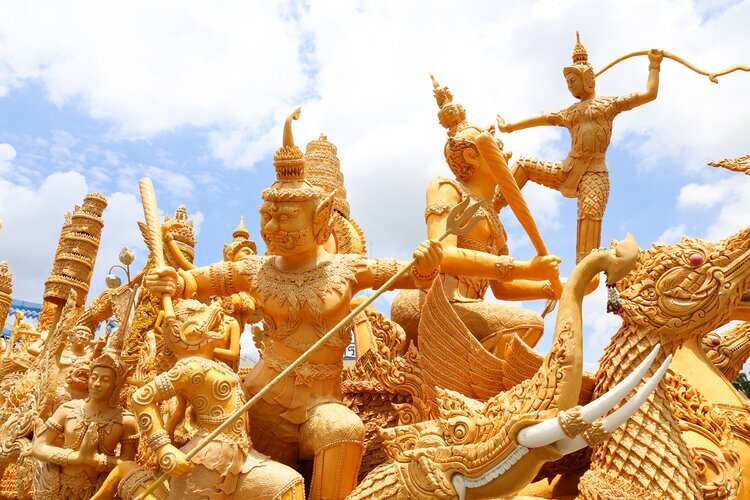 Ubon Ratchathani Candle Festival, Thailand
The Candle Parade: The Heart of the Festival
The candle parade is the most vivid expression of the living culture of the Ubon Ratchathani Candle Festival.
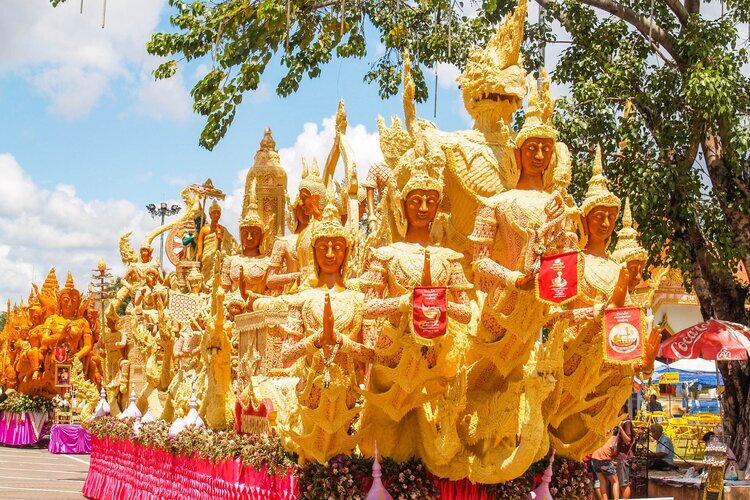
In the parade, 30–40 towering wax sculptures move slowly through the streets, accompanied by music, dancers, and cheering crowds.
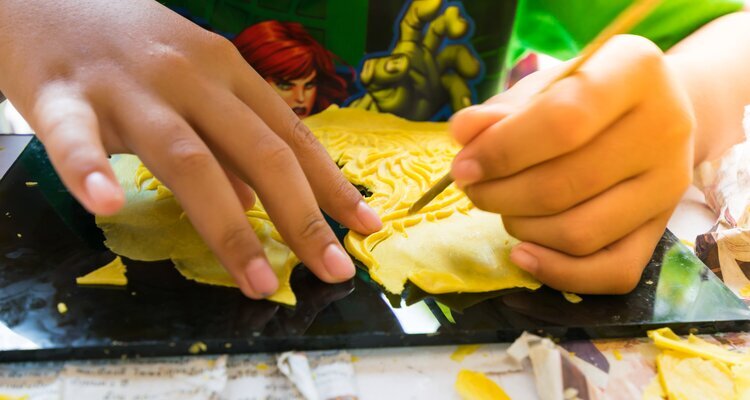
It's not merely a performance, but a collective offering. Each giant float belongs to one village. The villagers spend more than three months making it. They carefully cut thousands of tiny wax pieces and attach them one by one onto the huge base.
For locals, every cut and piece is a prayer, channeling their faith through time and detail. The procession itself is also a sacred ritual of a communal pilgrimage toward the temple.
 Ubon Ratchathani Candle Festival, Thailand
How to Understand the Secrets Behind the Wax Sculptures
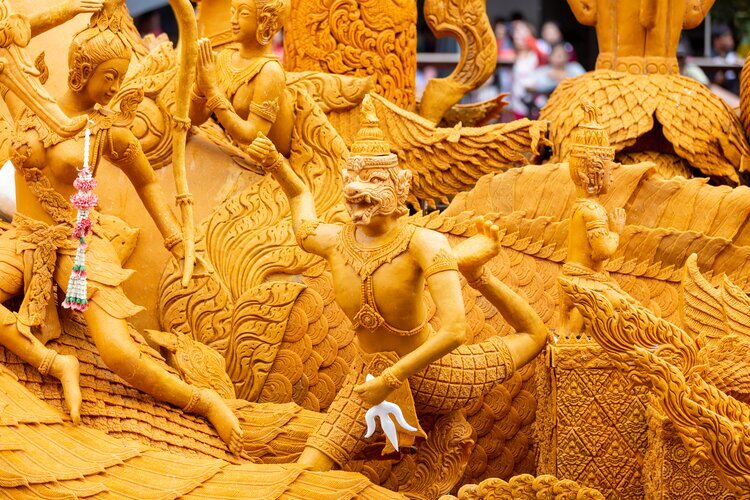
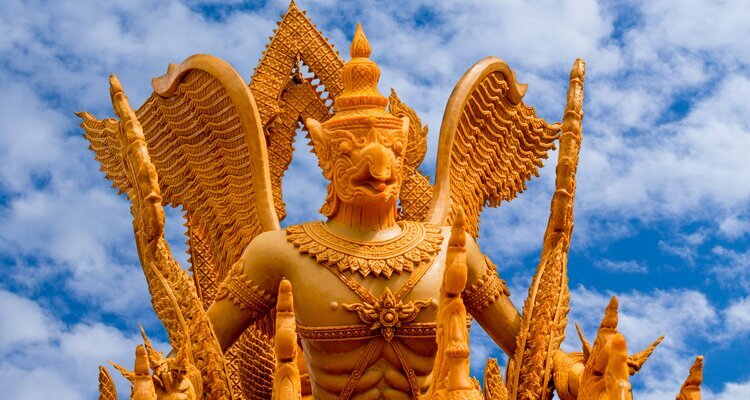
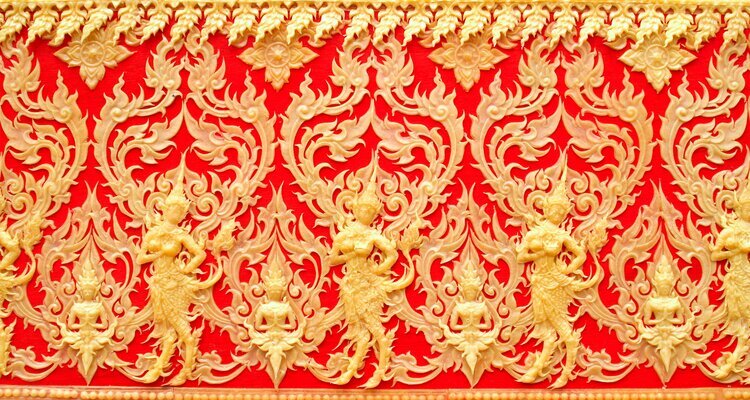
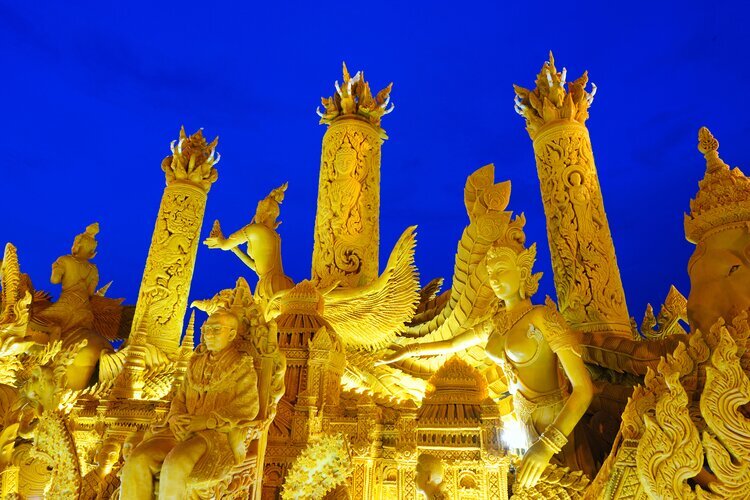
Most sculptures retain the natural yellow or light brown of the beeswax—the sacred colors of Buddhism.
Many scenes draw from the Jataka tales, stories of the Buddha's previous lives, where each life reflects a moral choice carried across time.
The carved figures also follow a spiritual hierarchy:
- At the very top are Buddhas or enlightened figures, symbolizing spiritual awakening.
- The middle often depicts human life and moral dilemmas.
- At the bottom are often guardians, animals, or mythological beings closer to the earthly realm.
You will frequently see figures like the Naga (a mythical serpent). As a guardian of water, it connects directly to agricultural life in the region, where rainfall determines survival.
 Ubon Ratchathani Candle Festival, Thailand
Don't Miss the People Behind the Parade
The floats may take center stage, but the people alongside them bring Isan culture to life.
Musicians play Mor Lam, the folk music of the Isan region, while dancers perform the Serng, imitating daily life in Isan like harvesting rice or weaving cloth.
Their traditional clothes tell a story, too. The women wear Sinh (tube skirts) featuring Tin Chok patterns. These patterns act as a cultural code:
- Wide red stripes signal a village famous for red rice.
- Thin black stripes recall a history of raising silkworms.
- Gold threads often suggest ancestral ties to noble Laotian families.
 Ubon Ratchathani Candle Festival, Thailand
Sanuk: The Soul of the Candle Festival
To truly get the Ubon Candle Festival, you have to understand Sanuk—the Thai philosophy of finding joy in every task.
While Khao Phansa marks a solemn Buddhist period, in Ubon it transforms into a lively parade with cultural performances.
This spirit also turns humble offerings into a kind of artistic competition, with villages competing creatively in candle floats.
Rather than a solitary act of worship, the three-month crafting process is a social party involving schools, temples, and neighbors.
 Ubon Ratchathani Candle Festival, Thailand
The Candle Festival Venue: Thung Si Mueang Park
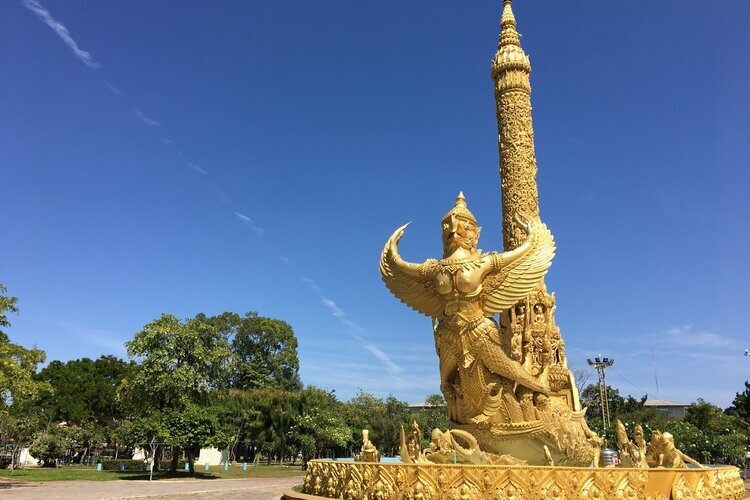
Thung Si Mueang Park is the central festival ground of the Candle Festival.
Once a royal rice field, the space carries a quiet memory of how land, power, and agriculture were once closely tied.
Today, it has become the city's most iconic landmark. At its center, you can see a massive permanent candle monument designed to mirror the floats in the parade.
During the festival, all candle floats are brought here for display. You'll get the closest views and the best photos of the intricate details. On the day before the main event, you can even see artisans making last-minute fixes.
On parade day, the park turns into the main viewing and judging area, where each village's work is presented to the wider community.
Beyond the parade itself, the park also reflects everyday Isan culture. Mor Lam music, traditional dances, and local performances bring the region's identity into a shared public space.
You can also find rows of local handicraft stalls (known as OTOP), where villagers sell regional specialties like handwoven textiles.
What's more, a festive food market surrounds the park. Grab some authentic Isan street food like spicy som tam and grilled pork with sticky rice to soak up the full festive atmosphere.
 Thung Si Mueang Park, Ubon Ratchathani
More Cultural Rituals to See Beyond the Candle Parade
While the candle parade is the most visible part of the Ubon Ratchathani Candle Festival, you can also see a series of quieter rituals rooted in Buddhist practice.
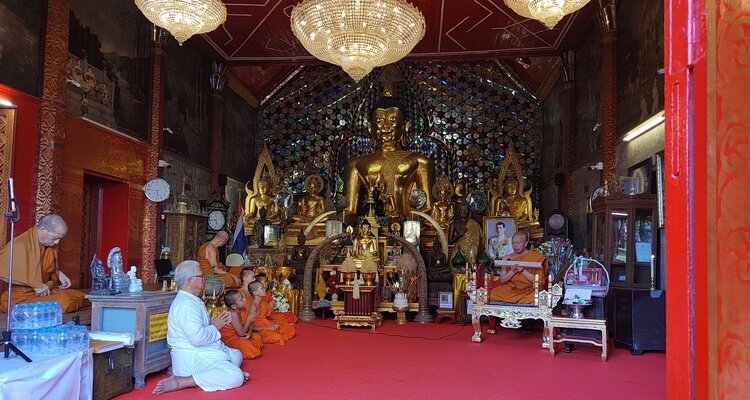
1. Wian Tian: A Path of Light and Reflection
Unlike the lively parade, the Wian Tian (Circumambulation) is a moment of deep, quiet connection.
Held on the evening of Asanha Bucha (July 29, 2026), this ceremony marks the day the Buddha delivered his first sermon.
Locals gather at temples at dusk, holding a "Triple Offering" in their hands: a candle for wisdom, incense for purity, and a lotus flower for the Buddha's teachings.
Led by the rhythmic chanting of monks, the community walks three times clockwise around the ordination hall. Each circle has a specific meaning—the first honors the Buddha, the second his teachings (Dharma), and the third the monastic community (Sangha).
I did this last year, and seeing hundreds of candles glowing while everyone moved together quietly was unforgettable.
Tip: If you want to experience this, head to any Buddhist temple near your hotel, like Wat Maha Wanaram.
2. The Ordination: A Sacred Rite of Passage
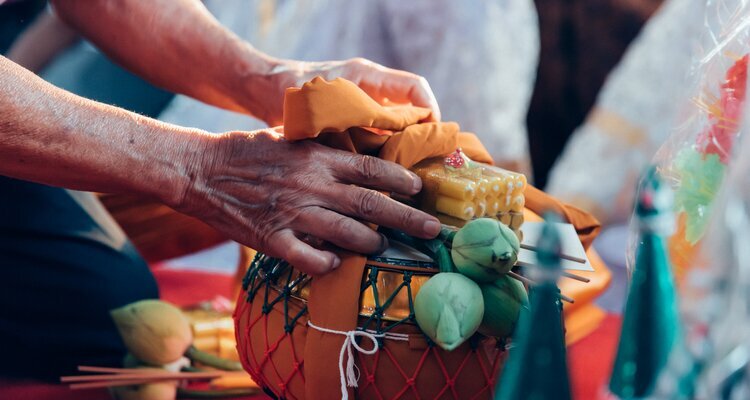
In Thai culture, ordination is the highest expression of gratitude a son can offer his parents. By entering the monkhood, even briefly, a man is believed to generate profound spiritual merit for his entire family.
Wan Khao Phansa (July 30, 2026) is the most traditional time for this commitment. By starting on this day, a man can complete the full three-month "Rainy Retreat," the most respected path for a short-term ordination.
The ritual begins with the shaving of the hair and eyebrows, a powerful symbol of letting go of vanity and worldly ego.
The family walks clockwise around the ordination hall three times. This movement helps the candidate "leave the world behind" and focus his mind on the sacred life ahead.
The ritual culminates inside the hall, where he finally exchanges his white cloth for saffron robes and receives his alms bowl.
 Ubon Ratchathani Candle Festival, Thailand
Do You Need Tickets?
You don't need a ticket to enjoy the Candle Festival.
The street parade, Buddhist rituals, and the wax sculptures around the park are open to the public for free.
If you want a shaded seat with a guaranteed view, you can grab a grandstand ticket for a few hundred baht, usually sold on-site.
 Ubon Ratchathani Candle Festival, Thailand
Where to Stay in Ubon Ratchathani for the Candle Festival
To fully enjoy the Candle Festival, staying in Ubon Ratchathani city center is the best option.
The city center is not big, so you can reach the venue within a 10-minute ride, wherever you stay in the town.
However, accommodation in Ubon Ratchathani is simple and limited, especially compared to Bangkok. If you want a bit more comfort, Centara Ubon is one of the best available options. But even that is closer to a solid 3–4 star experience rather than luxury.
During the festival, prices can double or even triple. For example, Centara Ubon can skyrocket from US$40 to around US$110. Hotels also sell out fast, often 3 months before, so book early!
If the city center is fully booked, you can stay in nearby towns like Warin Chamrap, about 15 minutes away. As public transport between the two towns is limited, plan transport to reach the parade in advance.
 Ubon Ratchathani Candle Festival, Thailand
How to Get to Ubon Ratchathani
Ubon Ratchathani sits in Thailand's far northeast, near the borders of Laos and Cambodia. Since it's off the usual tourist path, getting there takes a bit of planning.
The Fastest Way: Fly from Bangkok
Bangkok is your main gateway, including flights, trains, and buses.
A quick 1-hour flight is by far the easiest way to get here. While there are trains and buses, they usually take 9 to 10 grueling hours.
Unless you specifically enjoy slow travel, I wouldn't recommend them. Ultimately, the flight is typically well worth the extra $20 or $30 for the time you'll save.
Coming from the Islands or the North?
If you're coming from places like Phuket, Koh Samui, or Chiang Mai, you'll almost always need to fly through Bangkok first.
Trying to go overland from these spots can easily eat up 16 hours or more of your vacation.
Exploring the Region
If you're coming from nearby cities like Khon Kaen or Sisaket, there are local buses. But services are limited, and tickets are usually sold only at the local stations. For a smoother trip, it's better to book a private transfer.
How to Get Around the City
Once you land, the city center is only 10–15 minutes away from the airport. Since it's so close, you can easily grab a taxi or a tuk-tuk right outside, or we can arrange private transfers to skip the queues entirely.
 Ubon Ratchathani Candle Festival, Thailand
Travel Tips about the Ubon Ratchathani Candle Festival
1. Prepare for the heat and the rain.
During the festival, expect highs of 33–35°C (91–95°F) and high humidity.
To stay comfortable, we highly recommend the evening parade. It's noticeably cooler, and the candlelight adds a much more atmospheric feel. If you go to the morning one, bring a hat, a fan, and plenty of water.
Since it's also the rainy season, keep a light raincoat or umbrella handy for sudden tropical showers.
2. Plan your viewing spot.
You can get the best and closest views in the Thung Si Mueang Park. You can also find a grandstand seat on the spot. As the seats are limited, go there at least 1-2 hours before the parade.
For more space, consider watching the morning parade along Chayangkun Road, or the evening procession near Wat Si Ubon and Lan Khwan Mueang.
3. Arrive a few days early.
If you're in Ubon 2–3 days early, you'll actually get to see the wax floats being made and even try your hand at it. Way less crowded, way more chill.
4. Respect the dry holidays.
Since the festival falls on two of the holiest Buddhist days, a nationwide alcohol ban is in effect. Bars and shops won't serve drinks.
5. Expect limited English and plan accordingly.
In Ubon Ratchathani, English isn't as common as it is in Bangkok or Phuket. So it is highly recommended to download a translation app for basic needs.
If you want to dive deep into the "why" behind the rituals, booking a local guide is the best way to unlock the stories you won't find in a guidebook.
FAQ about Ubon Ratchathani Candle Festival
What happens to the candle floats after the festival?
The winning floats are usually kept on display at temple grounds in Ubon Ratchathani for a number of weeks after the festival.
Eventually, the wax sculptures are melted down in keeping with the Buddhist belief that nothing in life is permanent.
What if it rains? Will the parade be canceled?
No, the parade goes on rain or shine.
The rain rarely affects the full event, even if the festival falls in the rainy season. Because in Thailand, the tropical shower is usually brief (less than 1 hour).
With two parades each day, you still have a good chance of catching a dry window.
Even if it rains, you can still comfortably watch from grandstands or covered spots along the route.
What's more, the wax sculptures stop by Thung Si Mueang Park for a week, so you can see them up close on any dry spell.
Is it safe to go to Ubon Ratchathani?
Yes, it's safe to visit Ubon Ratchathani for typical travel activities like attending the Candle Festival, visiting temples, and exploring local markets.
But it's suggested to take extra care and check updates if you plan to visit border areas.
Plan Your Ubon Ratchathani Candle Festival 2026 Trip with Us
The Ubon Ratchathani Candle Festival is more than a parade—it's where art, faith, and community come together.
See the grand candle floats, experience the rituals, and plan your trip with us for a smooth, well-timed festival experience.
For more inspiration, you can also explore more festivals in Thailand.