
Most "best time to visit Chiang Mai" articles will tell you November to February. It is the cool and dry season, with comfortable temperatures and clear views. They're not wrong. But I think that answer is incomplete.
In most cities, the seasons mainly change the weather. In Chiang Mai, they change the experience.
I've visited Chiang Mai many times throughout the year, and every season has shown me a different side of the city.
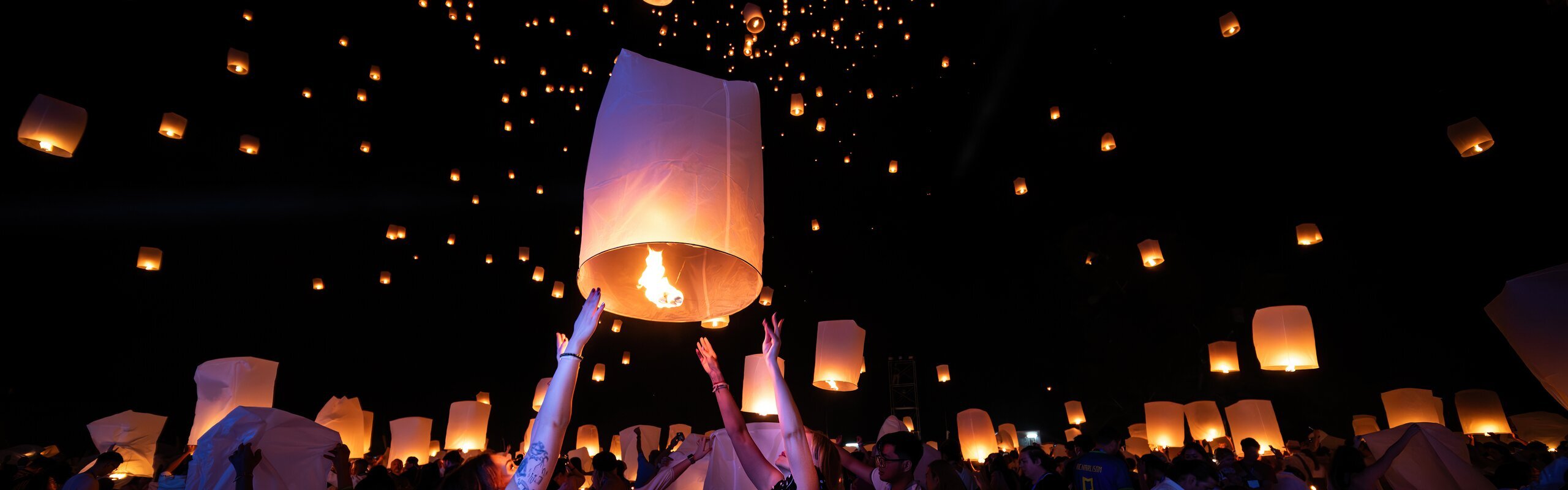
In November, I still remember standing beneath thousands of lanterns during Yi Peng Festival. In September, one of my favorite memories was the six of us feeding nine elephants at a sanctuary, with no queue and no crowd. In June, I spent a peaceful morning wandering through temples with hardly anyone else around.
Every season is a different version of Chiang Mai. So before choosing a month, ask yourself one question: Which version of Chiang Mai do you want to experience?
That's the question this guide will help you answer.
Quick Answer: When Is the Best Time to Visit Chiang Mai?
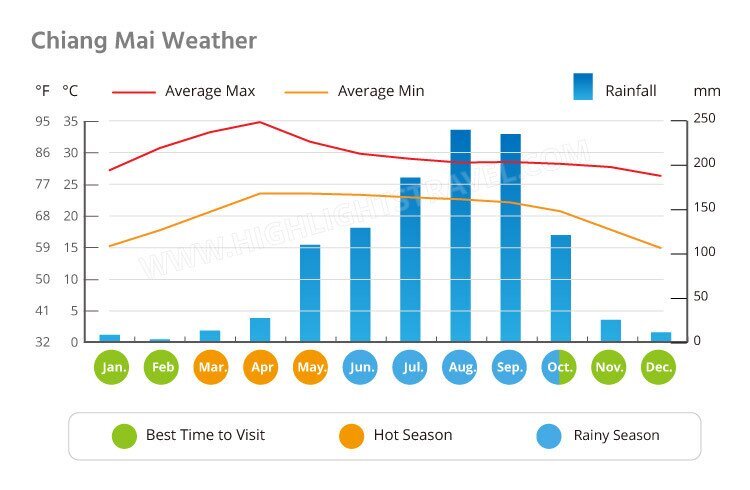
If you are a first-timer, visit Chiang Mai between November and February.
If I had to recommend just one month or if you visit Chiang Mai only once, I'd choose November. This is the month when you'll experience the city at its fullest. You get pleasant weather, beautiful mountain scenery, and the Yi Peng Festival—the event that transforms the city into somewhere truly unforgettable. I've experienced Yi Peng four times, and it still leaves me in awe every single time.
What if November doesn't work for you? The best time depends on which version of Chiang Mai you're looking for.
| If you're looking for... | Go in... |
|---|---|
| The classic first-time Chiang Mai | November |
| A relaxed family trip | December–January |
| A greener, quieter Chiang Mai | June–October |
| Thailand's biggest water festival | April |
| The fewest crowds and best hotel prices | June–October |
Should You Plan Your Trip Around Yi Peng?
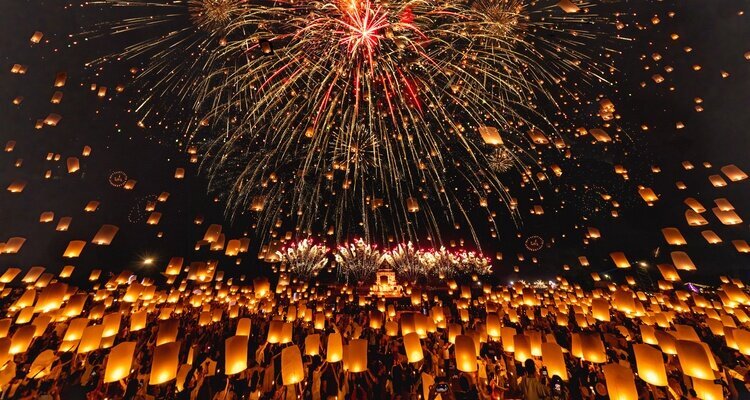 Yi Peng Festival
November is my top recommendation partly because of Yi Peng, but should you actually plan your entire trip around it?
If this is your first time in Chiang Mai, I would say yes. It is one of those rare travel experiences that can stay with you for years. Yi Peng is one of the world's largest sky lantern release events, and the moment thousands of lanterns rise into the sky feels truly special.
What makes it even more worthwhile is that Yi Peng is not just about the lanterns. Northern Thai culture, traditions, and food are all around you during this time, so you can experience a lot of what makes Chiang Mai special in one trip.
However, Yi Peng also changes the way you plan your trip. Hotel prices rise, popular areas become crowded, and festival tickets need to be arranged months ahead.
If you want to experience the festival, plan at least 4–6 months in advance. If Yi Peng is not your priority, you do not need to avoid November completely — visiting outside the festival dates can give you the same beautiful weather with fewer crowds.
What Actually Changes When You Visit Chiang Mai in Different Seasons?
While Bangkok and the islands tend to be hot and humid year-round, Chiang Mai enjoys cooler temperatures, especially during the dry season. Chiang Mai experiences three main seasons: dry, hot, and wet.
The calendar doesn't just change the temperature in Chiang Mai; it also creates three different versions of the city. Here's how each one reshapes what your trip can be.
Cool & Dry Season (Nov–Feb) – Chiang Mai at Its Most Comfortable
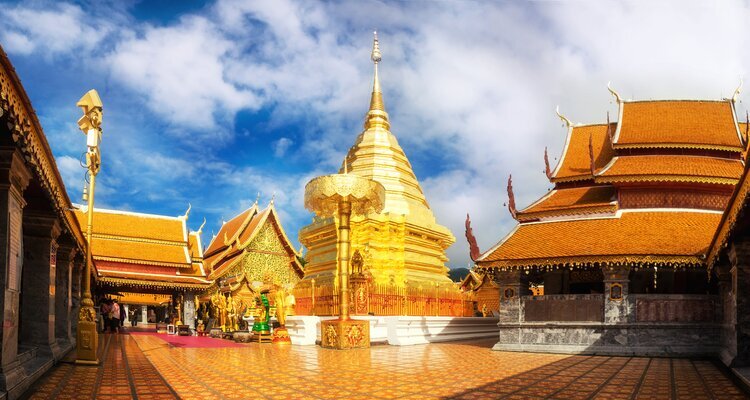 Doi Suthep
The cool season is the easy, safe answer. It is effortless to experience everything. Even in the afternoon, walking through the Old City or climbing the steps to temples is enjoyable, unlike the hot season when many travelers prefer to escape in cafés or hotels. In Doi Suthep, the valley opens below you, while in August the summit may sit inside a cloud.
Pack a light layer for December and January nights. I've needed a down jacket when I attended the CAD New Year's Eve event in the mountains.
The cool evenings are the real gift. Sitting at the Night Bazaar, walking the markets, or lingering at an outdoor café becomes part of the trip.
This is also Chiang Mai's festival window: Yi Peng in November, Christmas and New Year, Lunar New Year, and February's Flower Festival. If a festival is your reason to come, this is your season, but book early, because the good hotels vanish first.
My tip: you pay peak prices for that comfort, and you share it with everyone who reads the same "November to February" advice. If you hate crowds and won't compromise on weather, late October or early November can be an option.
Hot Season (Mar–May) – Visit With a Purpose

The hot season puts Chiang Mai on a dawn-and-dusk clock.
Days run 38–40°C, so a temple visit in March has to start by 7 a.m. or you're finished by ten. The afternoon is better spent by the pool or enjoying indoor activities such as a Thai cooking class or spa treatment.
Then Songkran arrives on April 13–15 and the heat stops mattering, because everyone is soaked. I'd call it one of the best street parties in Asia.
My rule is simple: come in March–April for Songkran and it's a brilliant trip. Come for anything else and I'll usually steer you to another month. There's no reason to fly into 40°C just to discover you'd rather be somewhere cool.
About the Burning Season
March and April are also part of the burning season. The sky turns gray, photos lose their color, and there might be a faint smell of smoke in the air. Mountain viewpoints like Doi Inthanon and jungle trails are often affected by haze. If your Chiang Mai is temples, food, and culture, burning season is a non-issue.
If you have asthma, allergies, or simply dislike smog, you can skip these months.
Rainy Season (Jun–Oct) – A Quieter and More Personal Chiang Mai
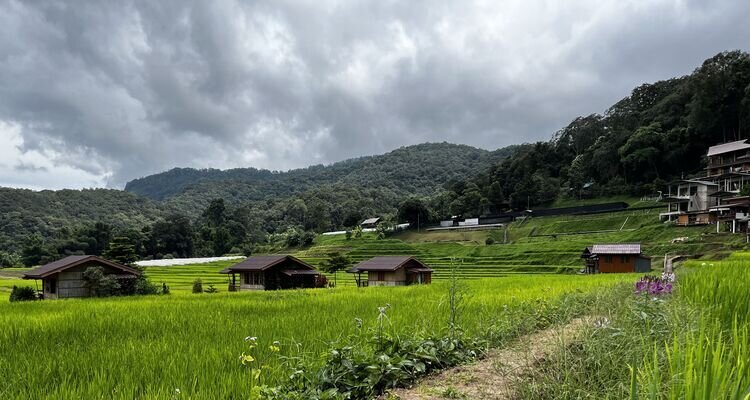
Green season is the most underrated time to visit Chiang Mai. Some of my favorite memories in the city happened during these months.
Don't let the word "rainy season" scare you. In Chiang Mai, rain often comes as short showers, usually lasting from a few minutes to around half an hour. They usually happen in the afternoon or evening. When it rains, I usually stop at a café, enjoy a meal, or enjoy a massage. Many times, the rain has already stopped before I even finish my coffee or dinner.
The biggest advantage of this season is the space it gives you.
During my June visit, one of my favorite experiences was simply walking through temples with almost no other visitors around. The same happened during my September visit to an elephant sanctuary. Only six of us were feeding nine elephants. There was no queue and no crowd, which made the experience feel much more personal.
 In September in Chiang Mai: Few crowds, close encounters with elephants
The trade-off is that nature views can be less predictable. When I visited Doi Inthanon in late August, the mountain was wrapped in clouds and mist, and I could barely see the Twin Pagodas from the summit. But the waterfalls were spectacular, and there were very few other visitors around.
If I were choosing for myself, I'd take the green season over December or January.
Tips: Rain is heaviest from late August through September. If you want less rain, early June or October is a safer bet. Even in September, though, it doesn't usually rain all day. You might get a heavy afternoon shower, then see the sun again a few hours later.
Not sure which season works for your trip? Talk to us. We’ll help you choose the right time and build a private itinerary that works with the weather.
The Sweet Spots Most Travelers Miss
If I could move half my clients, I'd pull them out of the obvious months and into these three windows.
Late October to early November is the cleanest transition you'll find. The rains have backed off, days settle into the low 30s°C, and the hills are still green. You get cool-season comfort and empty roads before Yi Peng and high-season pricing arrive. Aim for late October; if you push into November, check that year's Yi Peng date first.
Early June is the gap nobody books. The April heat has broken, the green season is just starting, and rain is still light. You land before the summer-holiday crowds flood in later in the month, so the temples are quiet and the rates haven't moved.
Late February is one of my favorite windows. You still enjoy comfortable cool-season conditions, but with fewer crowds than the peak holiday months and often lower hotel prices. The smoke season can begin around this time, and mountain views at places like Doi Inthanon may not always be as clear. However, for city-based trips focused on temples, food, and culture, the impact is often much smaller.
Chiang Mai Month-by-Month Guide
November — Yi Peng + Cool Season Arrival
The cool season opens, and Yi Peng takes place this month. If Yi Peng is your goal, lock everything 4–6 months out. If it is not your priority, consider visiting in other weeks of November to enjoy the cooler weather without the festival crowds and higher demand.
December–January — Peak Cool, Peak Everything
These are the most comfortable months of the year, but also the busiest. School holidays, Christmas, and New Year bring more travelers, so prices rise, hotels fill up, and popular attractions can get crowded.
The CAD New Year countdown has also become another highlight of Chiang Mai during this period.
This season is best for families and first-time visitors who value comfort and reliability over cost. If you are flexible, February can offer a similar experience with fewer crowds.
February — Still Great, Crowds Begin to Thin
February keeps many of the benefits of the cool season, while the biggest crowds begin to ease. The heat only starts to build toward the end of the month. Haze from the approaching burning season may also affect mountain views in some years.
March–April — Hot, Smoky, Then Songkran
Extreme heat, possible smoke from the burning season, then Songkran (April 13–15) resets the mood entirely.
Only choose this window if Songkran is the point — it justifies the heat. Otherwise, the smoke and temperature argue for another month.
May — The Turn
The heat eases as the first rains arrive; low season begins, and rates drop.
It is a sweet spot most people miss — lower prices and thinner crowds while the worst heat is already breaking. It is best for budget and shoulder-season travelers who do not need festival buzz.
June–August — Green, Quiet, and Affordable
Expect afternoon storms, but enjoy lush scenery, far fewer tourists, and more flexible tour options.
It is the value choice. If your trip is focused on city, culture, and food — not mountain-summit clarity — you lose surprisingly little and save a lot.
Plan outdoor sights for the mornings, when weather is often more predictable. This is also the Chiang Mai I described earlier: temples nearly to myself in June.
September–October — Wettest, Then Easing
September is the wettest month; October's rains ease right before high season, and the landscape is at its greenest.
Choose September if you want the lushest Chiang Mai and do not mind a downpour. Choose October for the smart compromise — green, quiet, and about to get busy, so book before November pricing arrives.
FAQ about Chiang Mai Weather
Q: When is the worst time to visit Chiang Mai?
A: March is the toughest month due to extreme heat and poor air quality from the burning season. September can also be tricky, with heavy rains and occasional flooding.
Q: What are the best months for outdoor activities in Chiang Mai?
A: November to February are ideal months for hiking, trekking, and sightseeing. The weather is cooler, dry, and very comfortable for spending time outdoors.
Q: Is it safe to visit Chiang Mai during the rainy season?
A: Yes. Rain usually comes in short bursts rather than lasting all day. It can still be a great time to visit if you plan flexible itineraries and stay aware of possible flooding in low-lying areas.
Q: What should I pack for Chiang Mai?
A: Bring light clothing for daytime, plus a jacket or sweater for cool evenings in December and January. If you're visiting during the rainy season, don't forget a good raincoat or umbrella.
Travel to Chiang Mai with Us
No matter when you plan to visit—whether it's the cool dry months, the lively festival season, or even the rainy months—we'll make sure your trip runs smoothly. With our private tours, you'll enjoy flexible itineraries, handpicked activities, and insider tips that let you experience the best of Chiang Mai in comfort.
Contact us today to start planning your unforgettable adventure!