
Chiang Mai Tourist Maps: Attractions, Old City Walking Tour & Hotels

Travel Consultant Turned Editor
This Chiang Mai map is made for planning, not reading long guides. Every map shows you exactly where things are—temples, elephant sanctuaries, markets, hotel areas, transport routes, and day trips—so you can judge distance and flow at a glance.
If you prefer seeing over scrolling, these Chiang Mai planning maps will help you decide faster and plan smarter.
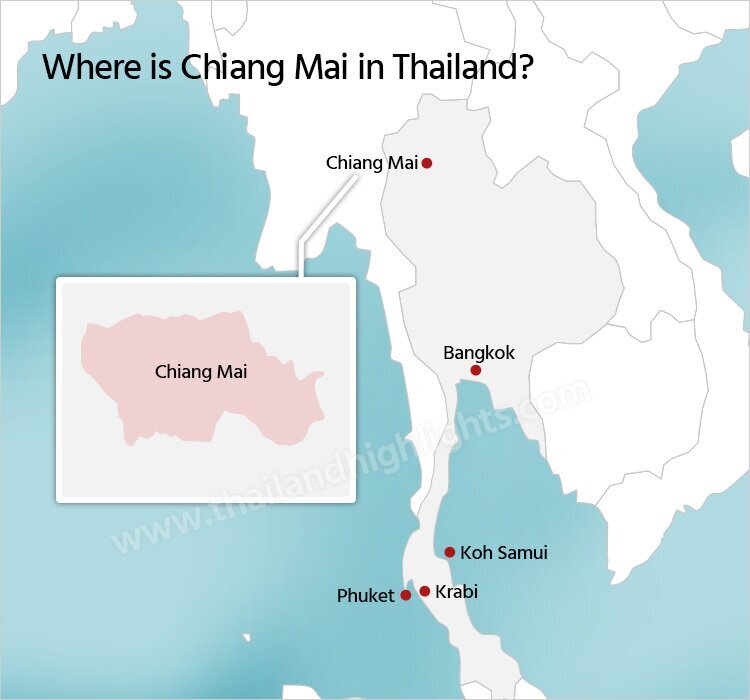
Chiang Mai Location Map: Where is Chiang Mai in Thailand?
Chiang Mai sits in northern Thailand. It's about 1 hour by flight from Bangkok and roughly 2 hours from the southern islands, which makes it an easy add-on before or after beaches or a city stay.
Chiang Mai Attractions Map: Top Things to Do
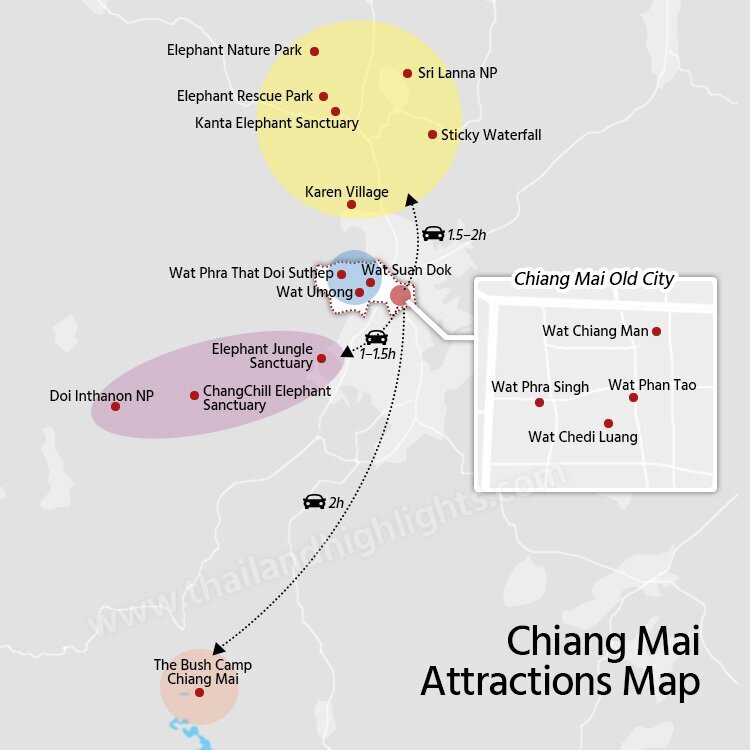
Chiang Mai's attractions can be grouped into temples, elephants, and natural highlights, each plotted on the city map to show clusters and proximity.
Temples (Best grouped on foot or short rides)
Most temples sit inside or just outside the Old City, which makes them easy to combine in one relaxed day.
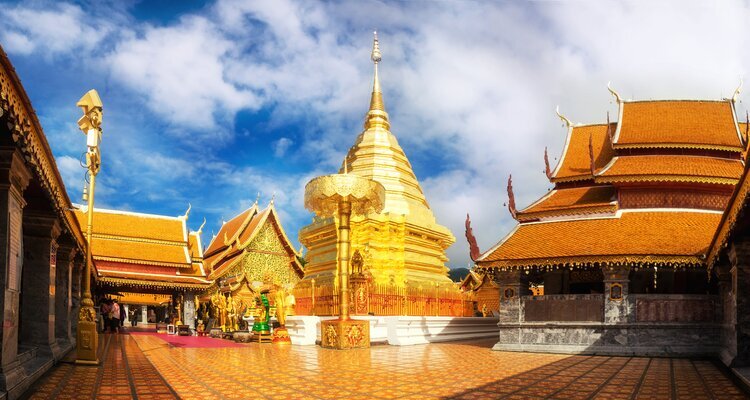
- Wat Phra That Doi Suthep: The icon of Chiang Mai for city panorama and hilltop golden stupa. Best visited at sunrise or sunset for quiet views and the monk chanting.
- Wat Phra Singh: one of the finest and largest examples of classic Lanna architecture; the most active temple during major festivals like Songkran.
- Wat Chedi Luang: Historic temple with a partially ruined chedi; the most sacred place.
- Wat Suan Dok: Historic royal temple with white chedi. Best for monk chats and meditations.
- Wat Umong: Forest temple with meditation tunnels and serene greenery.
- Wat Phan Tao: Wooden temple in Old City, serene and photogenic.
- Wat Chiang Man: Chiang Mai's oldest temple, known for its ancient Buddha images and elephant-supported chedi.
Get more details about the best picks for first-timers.
Natural Exploration (Best as half- or full-day escapes)
These spots sit outside the city, so they're best planned as dedicated outings.
- Doi Inthanon National Park – Thailand's highest peak, with hiking trails, waterfalls, and panoramic viewpoints.
- Sticky Waterfall (Bua Thong Waterfall) – Unique limestone waterfall you can climb; fun and interactive for all ages.
- Sri Lanna National Park – Forested park popular for biking and kayaking; ideal for nature lovers.

Ethical Elephant Sanctuaries
All elephant sanctuaries are outside Chiang Mai; allocate at least half a day for them.
- Elephant Nature Park – Best-known, home to 100+ elephants. Feeding is their only hands-on activity.
- Elephant Jungle Sanctuary –Most program options, from 1-hour to overnight. Multiple camps keep it uncrowded. Closer to the city, perfect for a short visit.
- Elephant Rescue Park – The most budget-friendly private half-day tours for an exclusive elephant experience.
- Kanta Elephant Sanctuary – The most affordable tours with moderate activities. Ideal for families with young kids and seniors.
- ChangChill Elephant Sanctuary – 100% hands-off, no bathing and feeding.
- Chiang Mai Bush Camp – Best overnight camp in Chiang Mai; multiple opportunities to feed and observe the elephants.

Chiang Mai Markets Map: Where to Eat and Shop
Chiang Mai is known as a "market paradise" —perfect for a laid-back vibe, strolling, and local eats.
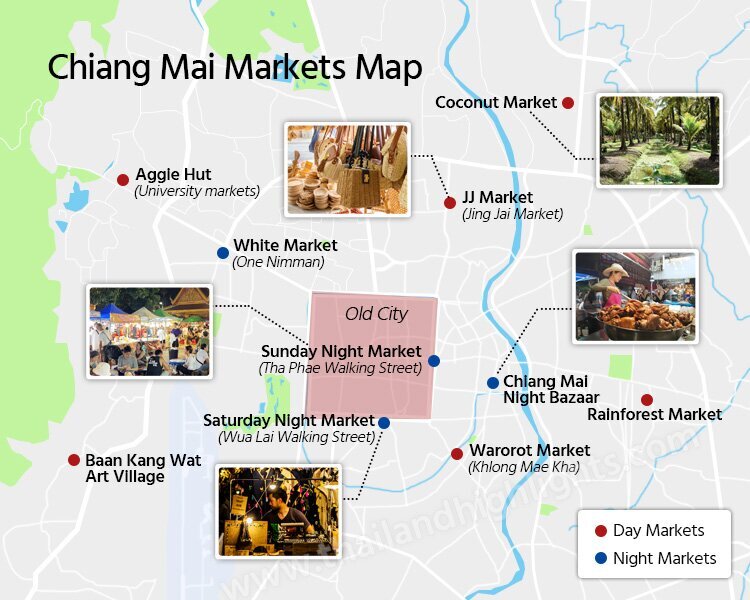
1. Night Markets – Evening strolls & street food
- Sunday Night Market (Tha Phae Walking Street) – Largest and most famous; also the most atmospheric one inside the Old City, along with most handicrafts, street food, street massages, and performances.
- Saturday Night Market (Wua Lai Walking Street): Smaller, more local vibe; artsy performances and street snacks.
- Chiang Mai Night Bazaar: The city's largest daily-access night market outside weekends. Ideal for casual shopping and dining.
2. Art & Handicraft Weekend Markets – Local craftsmanship & photos
- JJ Market (Jing Jai Market): Largest weekend craft market and first organic farmers' market in Chiang Mai.
- Baan Kang Wat Art Village: Unique for showcasing works from Chiang Mai's resident artists: pottery, sculptures, and paintings.
- Rainforest Market: Outdoor artistic market blending plants, crafts, and organic food. Distinctive for handmade little goods
3. Trendy / Instagram-Friendly Markets – Young traveler appeal
- Coconut Market: Set in lush coconut trees with tropical treats; photogenic corners perfect for casual strolls and coffee breaks.
- White Market (One Nimman): Minimalist, Japanese-inspired design; stalls with art, illustrations, and stylish goods for a modern, artsy vibe.
4. Traditional & Daily Life Markets – Local food & essentials
- Warorot Market (Khlong Mae Kha) – Renowned for authentic local shopping and the largest daytime market for everyday items and small night food stalls.
- Aggie Hut / University markets: Student-driven markets; Special for its fresh, locally-produced organic goods in a lively university environment.
Chiang Mai Old City Walking Tour Map
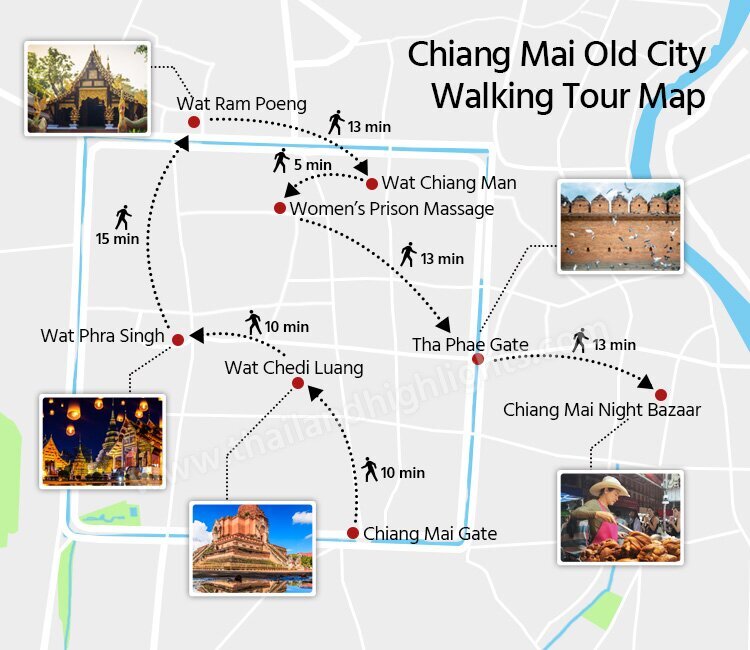
Route: Chiang Mai Gate → Wat Chedi Luang → Wat Phra Singh → Wat Ram Poeng → Wat Chiang Man → Women's Prison Massage → Tha Phae Gate → Chiang Mai Night Bazaar
This walking loop is designed to see the core of Chiang Mai with the least effort. It goes beyond temples, naturally linking morning markets, street food, a classic Thai massage, and a night bazaar in one easy flow.
Chiang Mai Itinerary Map
4 days is the most popular stay for first-time visits. It also deserves 1 extra day to enjoy the most atmospheric Chiang Mai during Yi Peng & Loy Krathong.
A classic Chiang Mai itinerary usually includes a city tour, an elephant tour, and 1 or 2 side trips as per your interests.
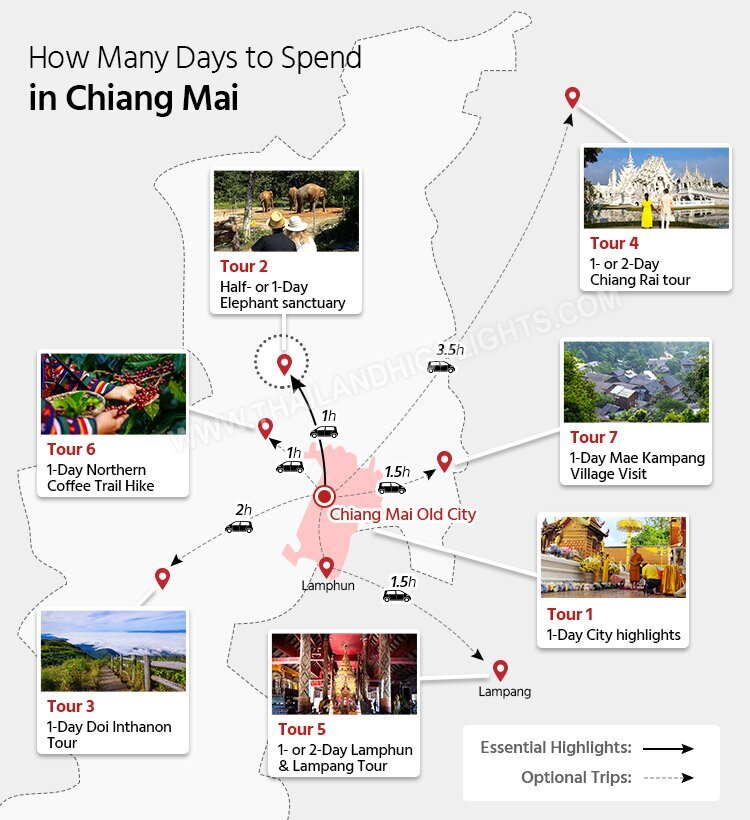
Check out the following details:
1. Chiang Mai City Tour: a must in every itinerary
You'll see the everyday rhythm of Chiang Mai.
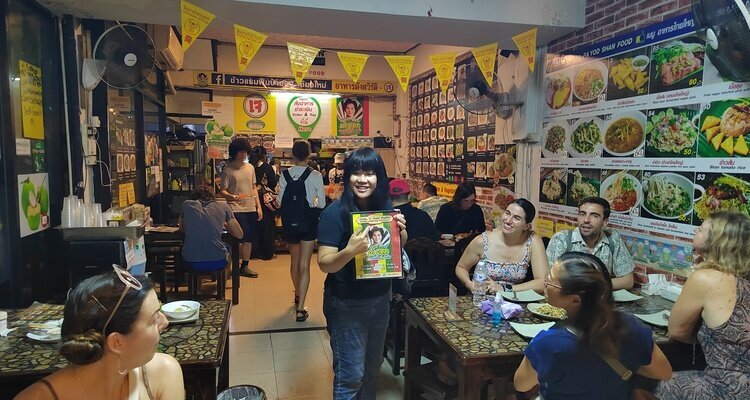
Walk through 2–3 Old City temples, climb Doi Suthep for panoramic views and local spiritual insight, then sample street food on a guided foodie tour.
2. Elephant Experience (Half or Full Day)
A half-day program is friendly to people with limited time. You can feed, wash, and observe elephants. For the rest of the day, pair it with a cooking class or Sticky Waterfall.
If you're keen on more time with elephants, choose a full-day option for a slower pace.

Optional Day Trips from Chiang Mai
3. Doi Inthanon National Park: A Natural Playground to Chill Out
If you want to escape from the temples and city life, this is your best spot.
Explore waterfalls, stroll through hill-tribe villages, visit the Twin Pagodas, and choose a short nature walk or a 2–3–hour forest hike.
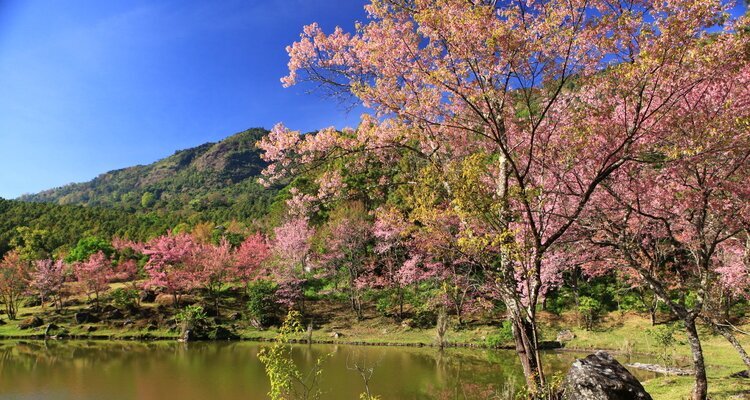
4. Northern Coffee Trail: Closer to Hill Tribe Life
This is a hidden gem that most travelers miss.
Walk through coffee farms with a local villager, learn how beans are grown and roasted, visit local hill communities, and enjoy scenic mountain views.

5. Mae Kampang Village: A favorite weekend escape for locals
You can spend a day in the forest village the way Chiang Mai locals do. It's a great place to take a light jungle walk, visit a waterfall, and relax in a nearby hot spring.
6. Lamphun & Lampang: Best for History Lovers
You will get close to the roots of Lanna civilization and explore northern Thailand's earliest capitals without crowds.
- Wat Phra That Haripunchai (Lamphun) – a 9th-century spiritual center
- Wat Phra That Lampang Luang – one of the best-preserved Lanna temples
- Phrachomklao Rachanuson – a dramatic mountaintop temple with wide views.
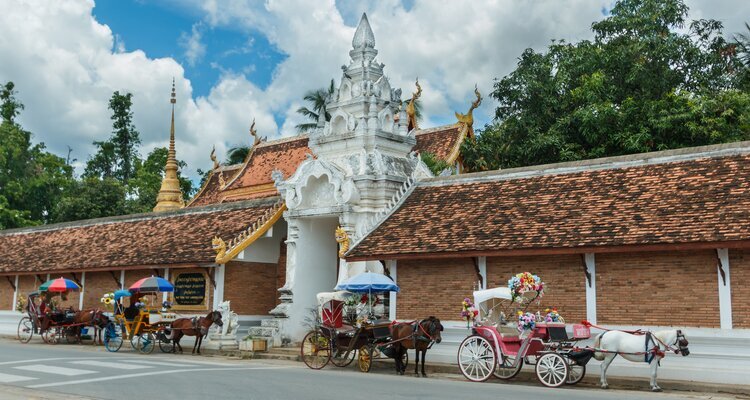
7. Chiang Rai: Best for art and architecture lovers
This is more of an art-focused pilgrimage than a relaxed excursion due to 3–4 hours of driving each way.
Visit White Temple, Blue Temple, and Black House, admire modern Thai art, and explore temple grounds.
If you want to include the Golden Triangle, plan 2 days in Chiang Rai.
Want to know more about each day trip? Check out the best Chiang Mai day trips for first-time visitors.
Chiang Mai Hotels Map: Where to Stay
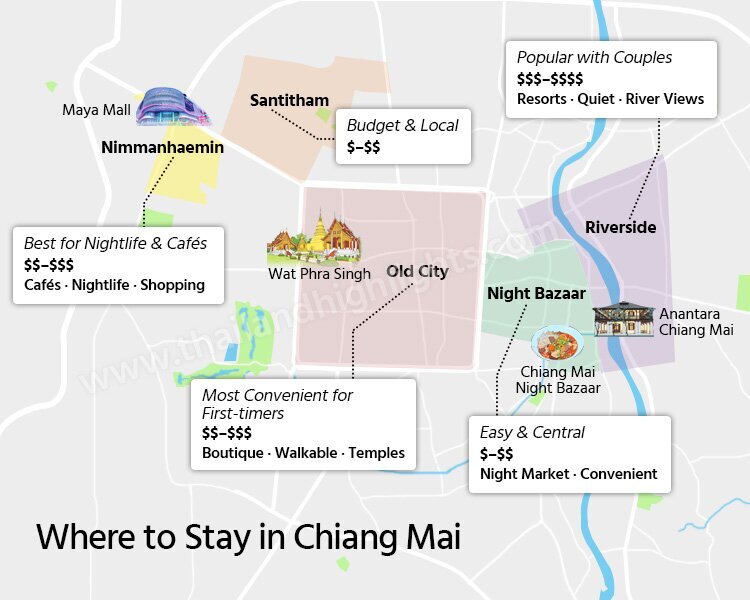
If hotel quality matters to you, stick with the Old City, Nimman, or the Riverside, where boutique hotels and higher-end stays are concentrated.
- Old City: Most popular for first-timers. Everything's walkable—temples, cafés, weekend night markets. Calm weekdays, lively on weekends/festivals.
- Riverside Area: Best for families or couples to chill. Quiet, green, spacious resorts, but still close to the Night Bazaar and the Old City.
- Nimman: Trendy district for digital nomads and nightlife lovers. Tons of cafés, bars, live music, and boutique hotels. Traffic can be busy.
If you're more budget-minded and don't mind short rides, areas around the Night Bazaar or Santitham offer better value.
- Night Bazaar / Thapae Gate: Convenient for night market shopping and street food, with plenty of budget to mid-range hotels. Touristy, lively in the evenings.
- Santitham: Budget-friendly and with a local vibe, popular with long-term stays and digital nomads. Not a tourist area, more like a regular Chiang Mai neighborhood.
If you want to learn more about hotel recommendations, check out Where to Stay in Chiang Mai.
Chiang Mai Domestic Travel Map
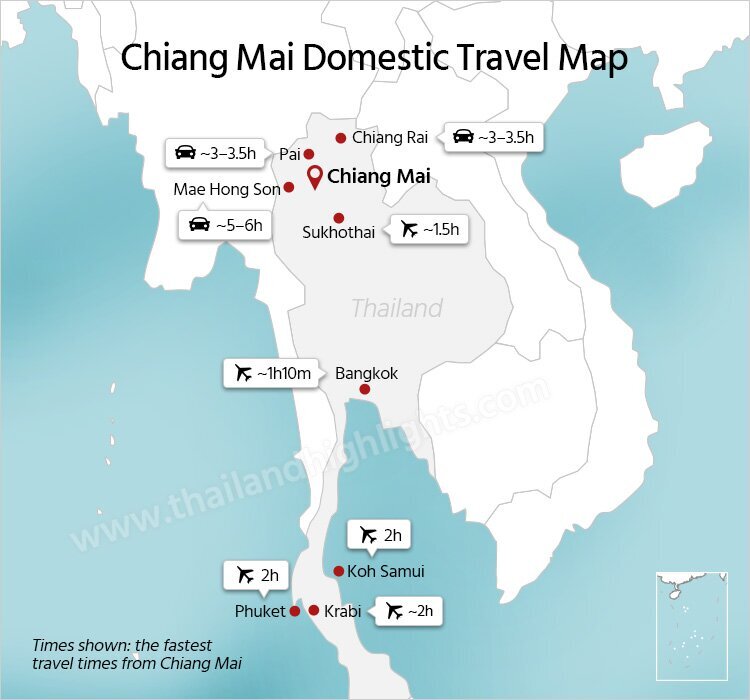
Chiang Mai is your gateway to northern Thailand. Nearby spots like Pai, Chiang Rai, Sukhothai, and Mae Hong Son are best reached by private car—winding roads, 3+ hours of travel.
For Bangkok and the southern islands (Koh Samui, Krabi, Phuket), flying is quickest—1–2 hours—but island flights are limited and sold out quickly, especially in peak season(November to April).
Chiang Mai Transport Map
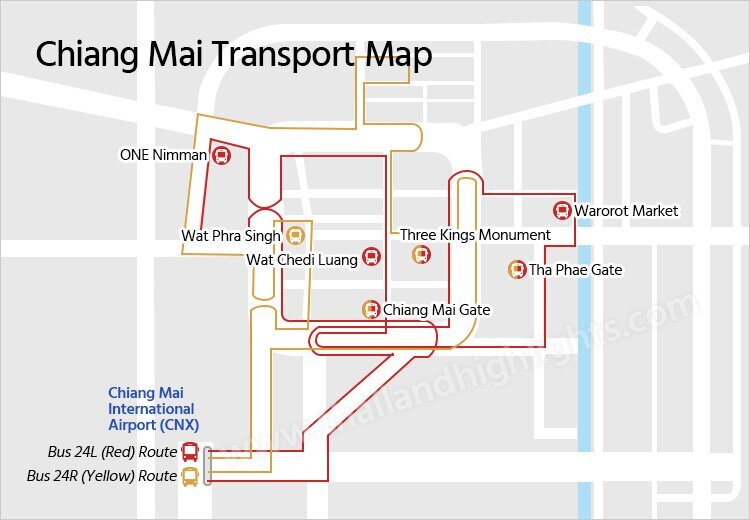
Chiang Mai has one airport, Chiang Mai International Airport (CNX). Just 4–5 km from the Old City, usually under 20 minutes by car to the Old City, Nimman, or Riverside.
Public transportation is quite limited in Chiang Mai. You can find 2 public buses from the airport to the Old City every hour, but out of service after 19:10.
Most visitors rely on red songthaews (shared pickup trucks) or private transfers.
From Map to Itinerary: Planning Chiang Mai and Beyond
Now that Chiang Mai makes more sense, the next step is deciding when to go and how to connect it with other destinations in Thailand.
Our guides on Chiang Mai tours, the best time to visit, and trip planning help you turn this map into a smooth, well-paced trip. Or contact us to tailor your trip to Chiang Mai directly.
If you're going to plan further, you can also check out our city maps: